How much sun gets in. How much heat stays out.
Every window quote you receive mentions numbers like “272”, “double Low-E” and “argon filled” — and almost nobody explains them. Here is exactly what each one does to the light, heat and UV coming through your glass, using the glass maker’s own published test data rather than sales copy.
We carry the whole range — and we tell you which one you need.
We are Royalty, and our standard specification is a royal one: triple-glazed 272/366 Low-E with argon, at no upcharge. But the best glass is not always the most expensive glass, and not every project has the same budget. We stock the full range and we will tell you honestly where you should and should not spend.
Clear or single Low-E
Clear / Low-E 180
Where budget is the binding constraint, or where the opening genuinely does not warrant more — a garage, a shed, an unheated outbuilding, a rental turnaround on a tight number.
Low-E 180 is also a deliberate high-performance choice, not just a cheap one: it has the highest solar heat gain of the family, which makes it the right coating for south-facing glass you want warming the room in January.
Triple-glazed 272/366
Low-E² 272 + Low-E³ 366 / argon
Three panes, two coatings, argon fill. Most companies in the GTA sell this as an upgrade line on the quote. It is our baseline — no upcharge, no exceptions.
It is the right answer for the overwhelming majority of GTA homes: strong insulation, real solar control on the hot elevations, and meaningful noise reduction.
Elevation-matched glass
Coating chosen per opening
The genuinely premium option is not a more expensive coating on every window — it is the right coating on each elevation. Higher solar gain on the south, maximum solar control on the west, pure insulation on the north.
It performs better than a single blanket specification and it frequently costs less. Ask us for it by name.
See what each coating actually does
Tap through the glass builds below. These are published centre-of-glass figures, not estimates.
Low-E² 272 — double Low-E
Two silver layers. The balanced coating, and half of our standard package.
Double-pane values with argon, so every option compares like for like. The insulation bar is inverted — longer means a lower, better U-factor.
Two panes, three panes, and the sealed space between
Glass itself is a poor insulator. Almost all of a window’s insulating value comes from the sealed cavity between the panes. Add a pane and you add a cavity — that is the entire principle.
Double pane
Two lites sealed around a spacer with argon in the gap. The standard replacement window across most of the GTA, and with a good coating it meets ENERGY STAR requirements comfortably.
Triple pane
A third lite creates a second cavity, roughly halving heat loss through the glass again. It cuts noise noticeably and keeps the indoor glass surface warmer — which is what actually stops the cold draft feeling by a window in January.
The trade-off
Each pane reflects a little more light and adds real weight. On very large sashes that weight matters for hardware and long-term operation, which is why sizing and good hardware go hand in hand with triple glazing.
Why we make triple pane the default
On pure energy savings, triple glazing takes a long time to pay back against a good double-pane Low-E unit. That is not why we fit it. The returns are comfort and quiet: a warmer indoor glass surface removes the cold-draft sensation near windows, and the extra pane meaningfully reduces traffic noise.
Those are the two things homeowners notice every single day. So we include them rather than selling them back to you as an upgrade.
What 180, 272 and 366 actually mean
These are Cardinal Glass product codes, and the numbering is not arbitrary. The first digit is the number of microscopic silver layers in the coating. The last two digits are the visible light transmittance in a standard double-pane unit. Once you know that, the whole range reads at a glance.
One silver layer
80% visible light
Two silver layers
72% visible light
Three silver layers
66% visible light
Each silver layer is thinner than a wavelength of light — applied in a vacuum chamber and sandwiched between anti-reflective metal oxide layers. You cannot see it. What it does is let visible light through while reflecting infrared heat back to the side it came from. More silver layers means more heat rejected and slightly less light.
What “double Low-E” means
Double Low-E is the trade shorthand for the two-silver-layer family — Low-E² 272 and 270. Triple Low-E means the three-layer Low-E³ 366. When our specification says 272/366, it means both coatings are working together in the same triple-glazed unit.
Where 180 belongs
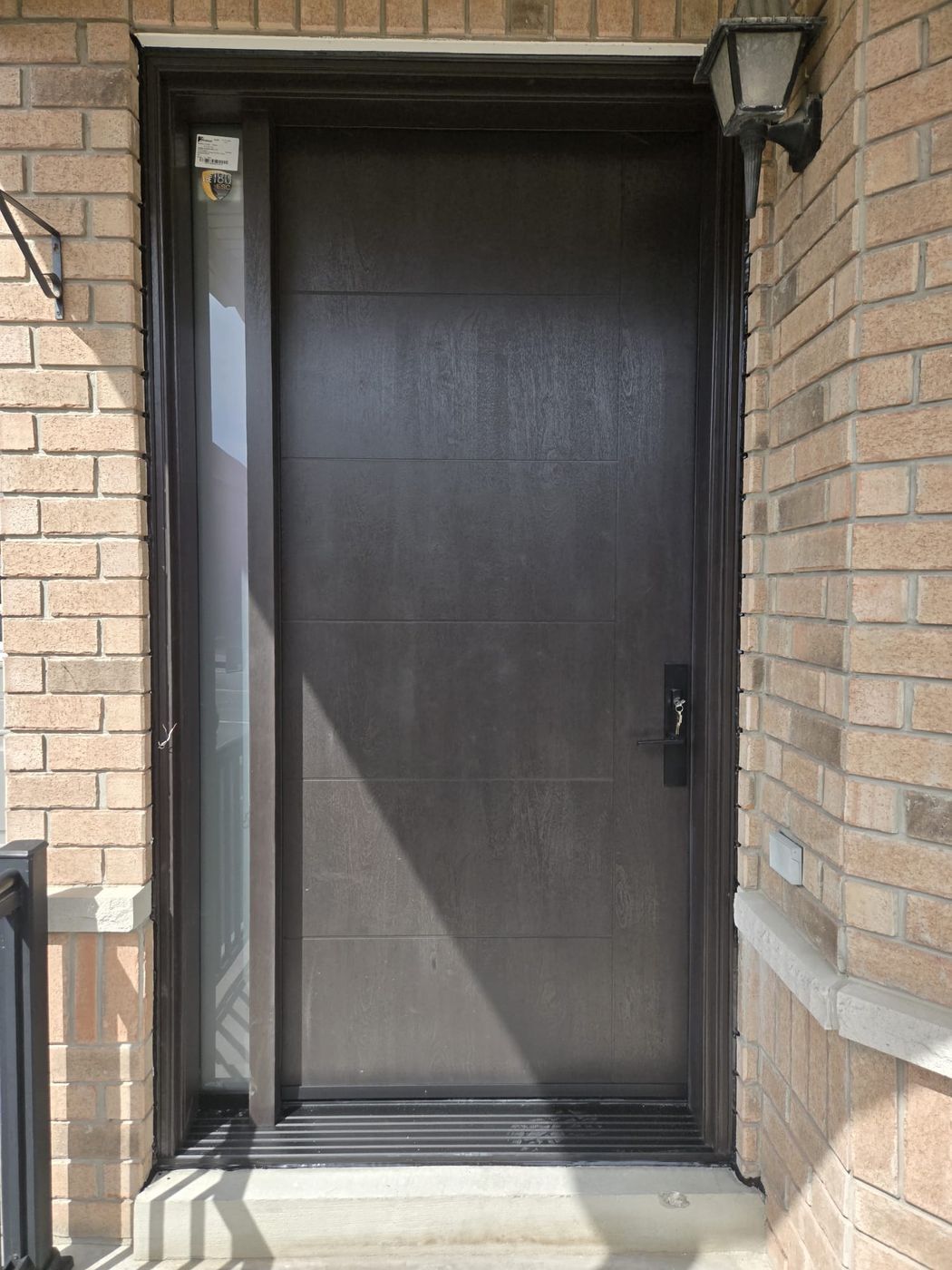
Low-E 180 is not simply the budget option. It has the highest solar heat gain in the family, which makes it the deliberate choice for south-facing glass and passive solar designs — free heat from December through March. Cardinal’s Canadian variant, 180 ESC, is built specifically for our climate and rating programs, and it turns up regularly in door glazing for exactly that reason.
Door glass and window glass are not the same thing
This trips up a lot of homeowners comparing quotes. A house does not get one glass specification — the windows get one and the doors get another, for good engineering reasons.
Different unit size
A door lite or sidelite is far smaller than a window, sits in a different frame material, and is usually surrounded by an insulated slab rather than being the whole opening. The heat-loss maths is completely different.
Different job
An entrance door is mostly solid insulated slab. The glass is there for daylight in the hallway and for how the door looks from the street — not to heat or cool the room behind it.
Decorative & privacy glass
Leaded, textured, frosted and decorative inserts are built differently from a clear insulating unit. Coating options are more limited, and privacy usually outranks solar control on a front door.
Patio doors are the exception
A patio door is the largest single area of glass in most homes, so it behaves like a very big window. Here the coating matters enormously — often more than on any individual window.
Different manufacturers
Our windows and entrance doors are built by Seal Tech in Concord. Our patio doors come from Vista. Each has its own glazing options, so the coatings available are not identical across the three.
What we do about it
We specify each separately and write both on your quote. If a competitor gives you one glass line covering the whole house, ask them what is actually going in the door.
What to ask for in writing
Ask for the coating name, the pane count and the gas fill — separately for windows, entrance doors and patio doors. For example: “Windows: triple glazed, 272/366 Low-E, argon. Patio door: triple glazed, 366, argon. Entrance door sidelite: Low-E 180 ESC.”
Vague phrases like “energy-efficient Low-E glass” tell you nothing about what you are actually buying, and as the table below shows, the difference between these options is substantial.
Published performance data
This is the glass manufacturer’s own test data, not our estimate. Ask any company quoting you for the equivalent table — if they cannot produce one, they may not know what glass they are selling you.
| Glass build | Daylight | SHGC | U · air | U · argon | UV blocked | Fade trans. |
|---|---|---|---|---|---|---|
| Clear / clear — no coating | 80% | 0.72 | 0.47 | 0.45 | 52% | 70% |
| Low-E 180 — single Low-E | 77% | 0.60 | 0.30 | 0.26 | 76% | 60% |
| Low-E² 272 — double Low-E | 70% | 0.40 | 0.29 | 0.25 | 86% | 53% |
| Low-E² 270 — double Low-E | 68% | 0.36 | 0.29 | 0.25 | 87% | 50% |
| Low-E³ 366 — triple Low-E | 63% | 0.27 | 0.29 | 0.24 | 96% | 41% |
Highlighted rows are the coatings in the Royalty standard window package.
Daylight
The share of visible light reaching the room. 80% is plain glass; anything in the 60s and 70s still reads as clear glass to the eye.
SHGC
Solar Heat Gain Coefficient — the fraction of the sun’s heat that gets in. 0.72 means 72% comes through. Lower keeps you cooler in July; higher keeps you warmer in January.
U-factor
How fast heat escapes. Lower is better. This is the number that decides whether the room by the window feels drafty on a cold night.
Argon, krypton — and yes, krypton is real
We get asked this constantly, usually with a Superman joke attached. Krypton is a genuine noble gas, it is genuinely used in windows, and it genuinely outperforms argon. It is also expensive enough that most homes should not buy it.
The baseline
Ordinary air convects freely inside the cavity, carrying heat from the warm pane to the cold one. An air-filled double-pane clear unit sits at U 0.47.
The sensible default
Denser than air and roughly a third less thermally conductive, so it slows convection in the cavity. Abundant, affordable, and it performs best in the wider 12–13 mm cavities used in insulating glass — exactly where it goes. This fills every Royalty window.
The premium option
Around twice as dense as argon with roughly half the thermal conductivity. Critically, it performs best in narrow 6–9 mm cavities — the gaps inside tightly built triple-pane units. That is why krypton and triple glazing get mentioned together.
Our honest recommendation: argon is the right call for essentially every GTA home, which is why it is our standard. Krypton earns its cost only when you are chasing a specific target — a Passive House build, a net-zero certification, or a narrow-cavity unit that physically cannot fit an argon-optimised gap. Manufacturers also blend the two to balance cost against performance.
If someone is upselling you krypton in a standard 13 mm cavity, they are selling you a gas that cannot do its best work in that space.
The right glass depends on which way the window faces
This is the part most quotes skip entirely. Here is how the coatings map onto a typical GTA home — and why we offer elevation-matched glass as a specification rather than a single blanket package.
Higher solar gain — 180 or 272
Southern glass is a free winter heater. With decent roof overhangs shading the high summer sun, a higher-gain coating pays you back on every cold, bright day. Large unshaded south glass leans back toward 272 to keep July manageable.
Maximum solar control — 366
Low afternoon sun arrives almost horizontally and no overhang stops it. West rooms are the ones hitting 30 °C at 6 p.m. in July. This is where 366 earns its keep.
All insulation, nothing to reject
North glass gets almost no solar gain, so the entire job is insulation. Triple glazing and a low U-factor matter most here; the coating choice matters least.
Balanced — 272
Morning sun is welcome and short-lived. The balanced coating handles it without making breakfast-table light feel grey.
Usually 366
The largest single area of glass in the house, and most often on the rear or west elevation. Solar control here changes how the whole living space feels in summer.
Often 180 ESC
Smaller lites in an insulated slab. The Canadian cold-climate coating suits the job, and privacy or decorative glass often drives the decision instead.
What this means for your furniture
Fading is driven by UV plus part of the visible spectrum, which is why the table lists both UV blocked and a fade transmission figure. Going from clear glass to 366 takes UV transmission from 48% down to 4%, and cuts overall fade-causing transmission from 70% to 41%.
No glass stops fading entirely. But that is the difference between a rug that lasts five years and one that lasts fifteen.
Straight answers
Is there really a gas called krypton?
Yes. Krypton is a naturally occurring noble gas, present in trace amounts in the atmosphere, and it is used commercially in high-performance insulating glass. It is denser and less thermally conductive than argon, so it insulates better — but because it exists only in trace quantities it is far more expensive to extract, and it works best in narrow 6–9 mm cavities rather than the wider gaps in standard units.
Why is the glass in my door different from my windows?
Door lites are smaller, sit in a different frame material, and are surrounded by insulated slab rather than being the whole opening — so the heat-loss maths is different. Decorative and privacy glass is also built differently from a clear insulating unit. We specify windows, entrance doors and patio doors separately and write all three on your quote.
Do you only sell the expensive glass?
No. Our standard package is triple-glazed 272/366 with argon at no upcharge, but we carry the full range including single Low-E 180 and clear glass. Some openings genuinely do not warrant the top specification, and 180 is a deliberate performance choice for south-facing glass rather than simply a cheaper one. Tell us your budget and we will tell you where it is worth spending.
What is the difference between Low-E and double Low-E?
The number of silver layers in the coating. Single Low-E has one, double Low-E has two, triple Low-E has three. Each layer reflects more infrared heat, so more layers means lower solar heat gain and slightly less visible light. Our standard window package uses both 272 and 366 coatings in one triple-glazed unit.
Does argon leak out over time?
A small amount permeates through the seal each year, which is normal and accounted for in the design. What matters far more is seal and spacer quality, because a failed seal loses the gas quickly and lets moisture in — that is the fogging you see in older units. Ask about the warranty on seal failure specifically, not just “the window.”
Is triple pane worth it in Toronto?
For comfort and noise, yes. For energy savings alone the payback against a good double-pane Low-E unit is slow. We include triple glazing as standard because a warmer indoor glass surface removes the cold-draft feeling near windows and the extra pane cuts traffic noise — the two differences homeowners actually notice daily.
Will Low-E glass make my rooms dark?
No. Even the most aggressive coating in common residential use passes 63% of visible light, and it is optically neutral — no bronze or grey tint. From inside, Low-E glass looks like clear glass. From outside in certain light you may notice slight reflectivity, which most people stop seeing within a week.
Not sure which glass your home needs?
We measure on site, note the orientation and shading of every opening, and put the full glass specification for your windows, doors and patio doors in writing. Most installs completed within one week of your quote.